

News

01-10-2026 - Internship Opportunities Now Open
We are offering curricular internship opportunities for motivated students eager to work on cutting-edge urban research projects.
Example topics include:
- Sensitivity & Risk Analysis: Design and integrate methods tailored for modular, multi-component models to evaluate uncertainty propagation, risk assessment, and global sensitivity in complex socio-technical systems.
- Surrogate Modelling: Design and integrate surrogate models (e.g., Gaussian processes, neural surrogates) to accelerate computationally expensive simulation runs.
- Spatio-Temporal Uncertainty: Develop approaches to represent uncertainty and model sensitivity for multidimensional simulation outputs within the Civic Digital Twins framework (e.g., using real-world use cases like the Bologna Digital Twin). Additional topics can be discussed based on the candidate's interests and alignment with the group's research activities.
These internships provide hands-on research experience, collaboration with interdisciplinary teams, and opportunities to contribute to scientific publications. For more details, please refer to the link below.
Link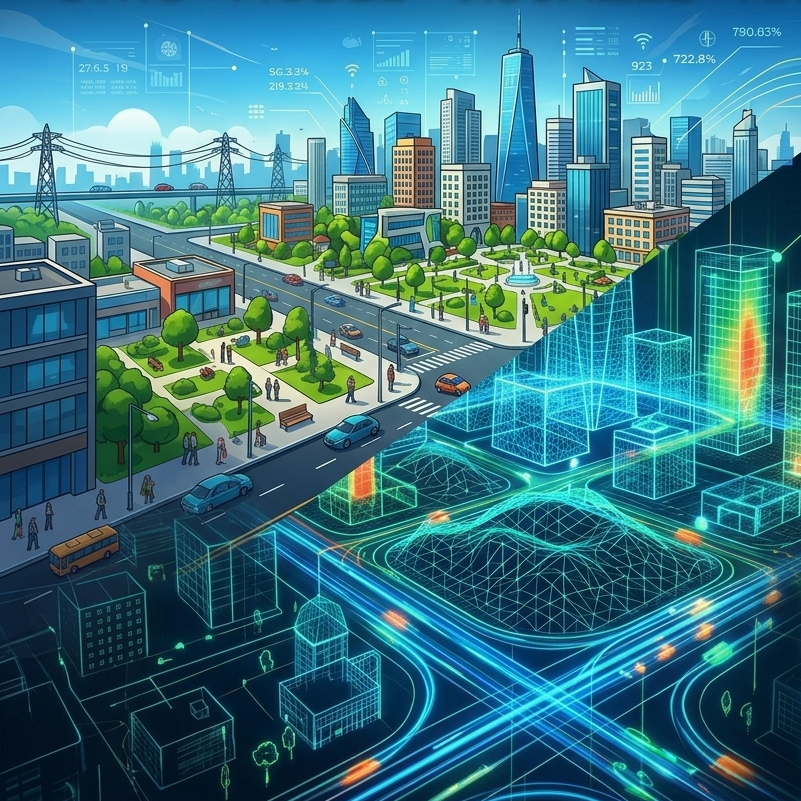
01-10-2026 - Civic-Digital-Twins version 0.12.0 is out!
Until now, the library has been primarily focused on scalar values and time series. With this release, we're taking a broader approach: the core abstractions can now represent and operate on multiple types of data and domains, not just time.
Some of the key pieces that make this possible:
The goal is to make the library less tied to a specific kind of data and provide a foundation that can work with different dimensions, domains, and model structures, matching the requirements of the new application domains where we are using CDT.
There's still plenty to build, but this release marks an important evolution toward a more general modeling framework.
Link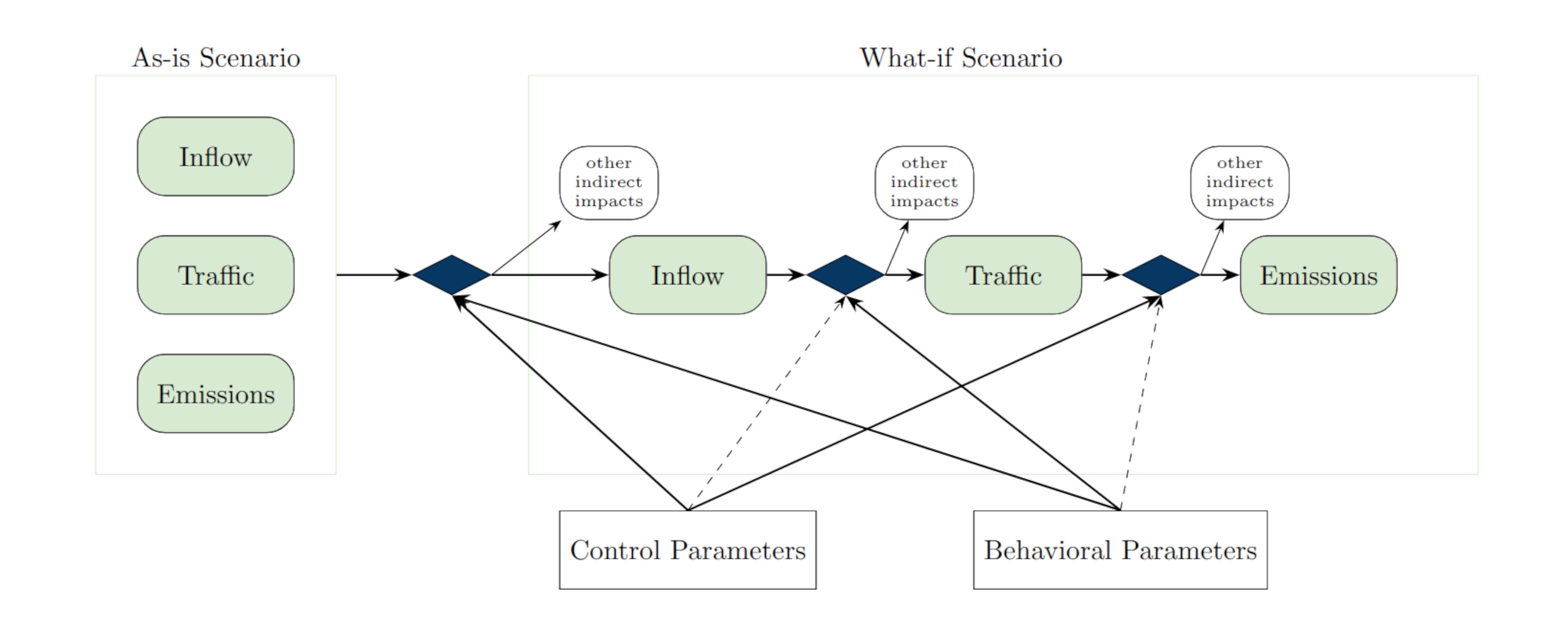
02-09-2026 - Simulation-driven decision-making for cities: our new publication is out!
We are pleased to announce the publication of "Evaluating impacts of traffic regulations in complex mobility systems using scenario-based simulations" in Transport Policy (Vol. 189, 2026).
This work presents a simulation-based framework for ex-ante evaluation of urban mobility policies, integrating traffic dynamics with behavioral responses. Through a case study in Bologna, we demonstrate how policy design choices and modeling assumptions substantially affect outcomes, enabling more informed and transparent decision-making for cities.
Authors: Arianna Burzacchi and Marco Pistore
Read the full paper here!
Link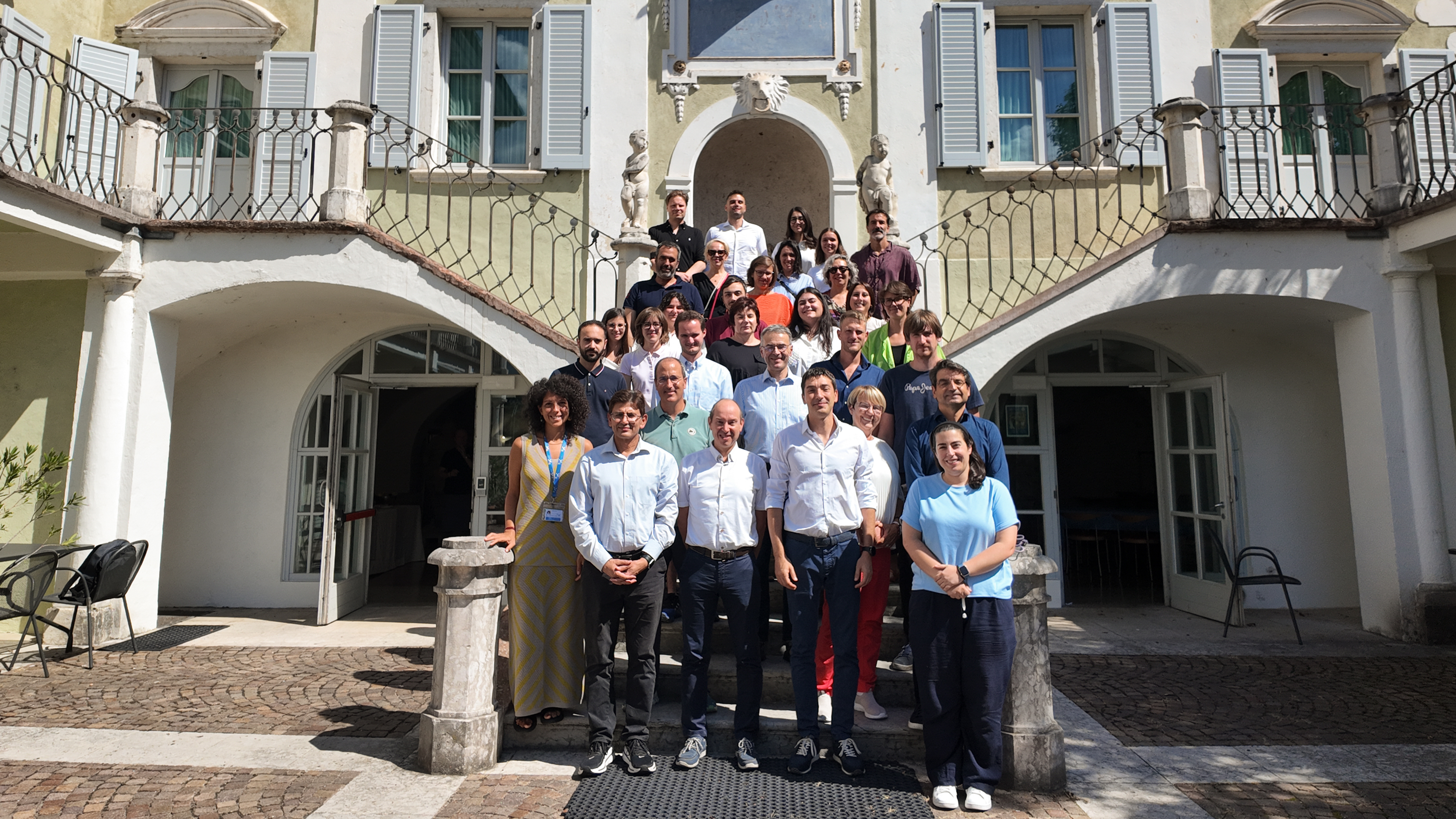
01-09-2026 - TERRAE project kick-off!
Comunità rurali europee più resilienti grazie a dati, intelligenza artificiale e Digital Twin.
Ha preso il via TERRAE, progetto europeo coordinato da Fondazione Bruno Kessler - FBK e che riunisce 17 organizzazioni di 8 paesi. Nei prossimi quattro anni il consorzio svilupperà nuovi strumenti digitali per aiutare le aree rurali ad affrontare cambiamento climatico, spopolamento e trasformazioni economiche e sociali.
Al centro del progetto il Digital Twin, una rappresentazione digitale dinamica del territorio che integra dati ambientali, geografici, sociali ed economici. Attraverso intelligenza artificiale, simulazioni e visualizzazioni 3D sarà possibile esplorare scenari futuri e valutare l’impatto di politiche e interventi prima di applicarli sul territorio.
Le soluzioni saranno sperimentate in cinque territori rurali europei. Tra questi le Valli Giudicarie, dove FBK e Provincia Autonoma di Trento lavoreranno sulla resilienza del sistema forestale, dalla salute dei boschi e diffusione del bostrico alla produzione di legname e disponibilità di manodopera.
Link
12-08-2026 - PhD Opportunities - Join Our Research Group!
We are offering two fully funded PhD positions within our research group: C4 - Modeling and Simulation of Urban Digital Twins
The position is hosted directly within our research group, ensuring that PhD candidate is fully integrated into a collaborative environment and actively involved in daily research activities.
Application deadline: 27 August 2026
For more details, please refer to the link below.
Link